Chromo: Physics-Based Chromatin Simulator
Joseph Wakim, Bruno Beltran, Andrew Spakowitz
Quickstart
Chromo is publicly available on the Spakowitz Lab GitHub account in the “Chromo” repository. The software is primarily designed for Unix-like environments (Mac and Linux) using the Anaconda package manager. Follow the steps below to set up Chromo locally:
Clone the Chromo repository to your local machine.
$ git clone https://github.com/SpakowitzLab/chromo.git
Run
make_all.shin the main directory of the repository to automatically set up a new conda environment namedchromo, install the required dependencies, and compile the Cython code.
$ cd chromo
$ bash make_all.sh
$ conda activate chromo
Introduction
As a successor to WLCSIM, Chromo is a physics-based Monte Carlo (MC) simulator developed by the Spakowitz Lab at Stanford University to model the spatial organization of chromatin. The simulator is implemented in Python and Cython, enabling efficient evaluation of MC steps. The software is lightweight, with coarse-grained chromosome simulations running on a single CPU core in under two days. Chromo is implemented in an object oriented manner to promote future adaption of the software. This documentation provides descriptions of the codebase and associated theory. The documentation also includes tutorials to guide users through example simulations. We encourage use and modification of the simulator for research purposes to model chromatin or other polymer systems.
Chromatin Simulation
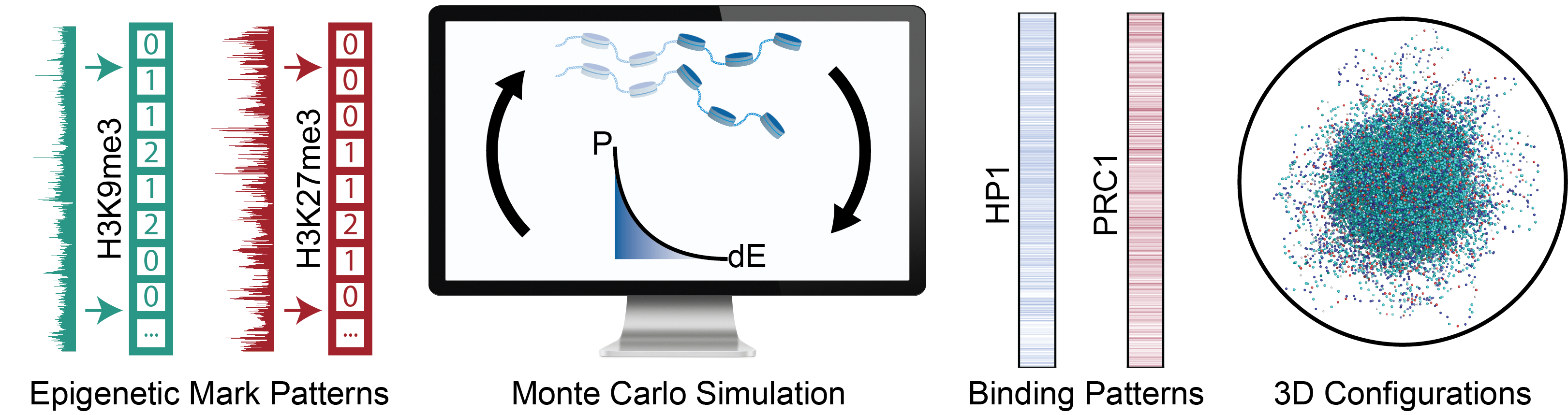
For the purposes of simulation chromatin, we begin with a pattern of epigenetic marks that are derived from ChIP-seq data. These epigenetic marks determine the identities of monomers along the chromatin fiber. Epigenetic marks are preferentially bound by reader proteins, which interact with one-another to affect chromatin architecture. Using Monte Carlo simulation, we obtain thermodynamically determined chromatin configurations based on the cooperative binding of reader proteins to the chromatin fiber.
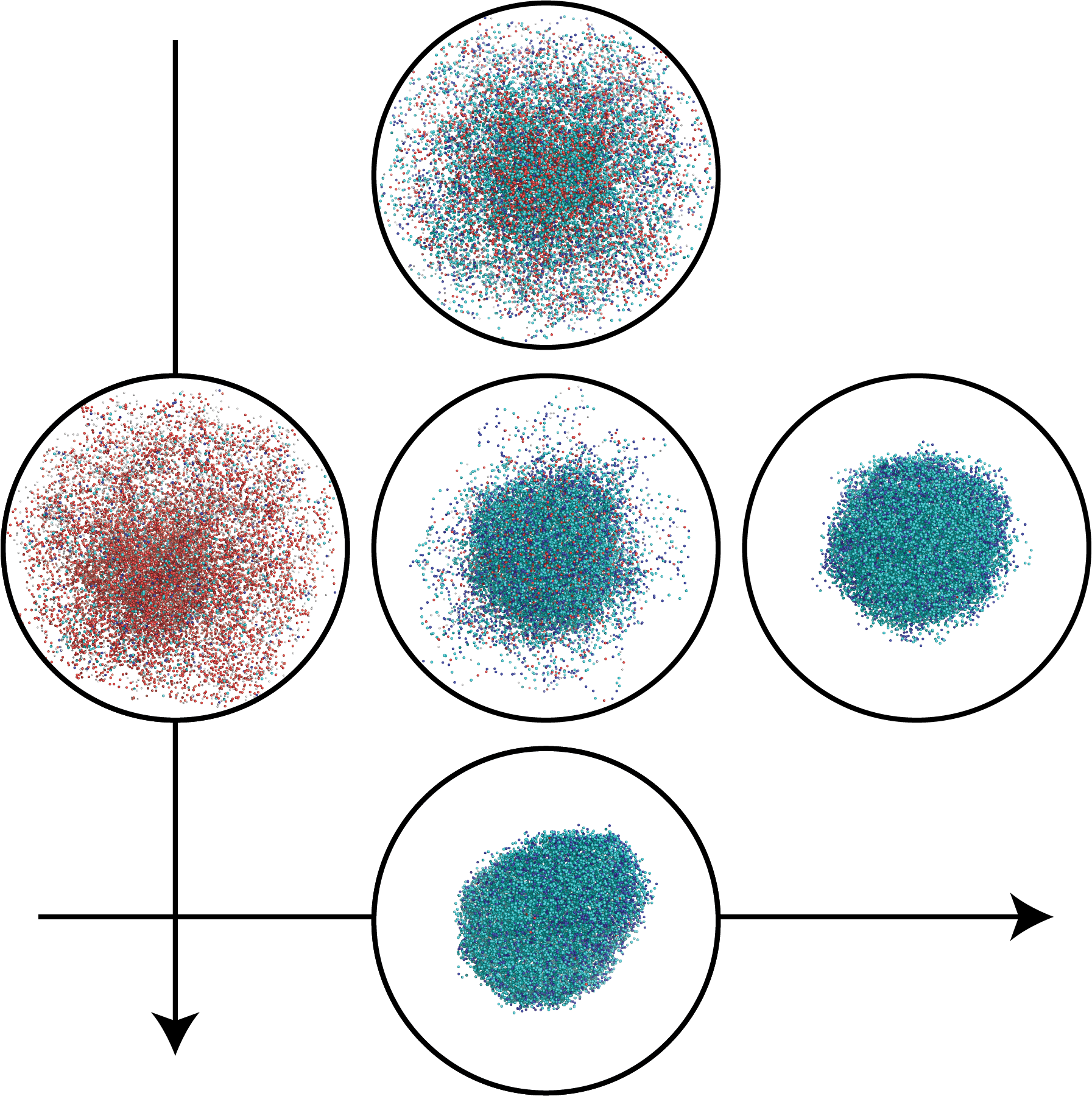
Using our physics-based simulator, we can vary conditions in the nuclear environment to study effects on chromatin organization. For example, we can study the effects of reader protein concentrations and interactions affect chromatin compartmentalization.
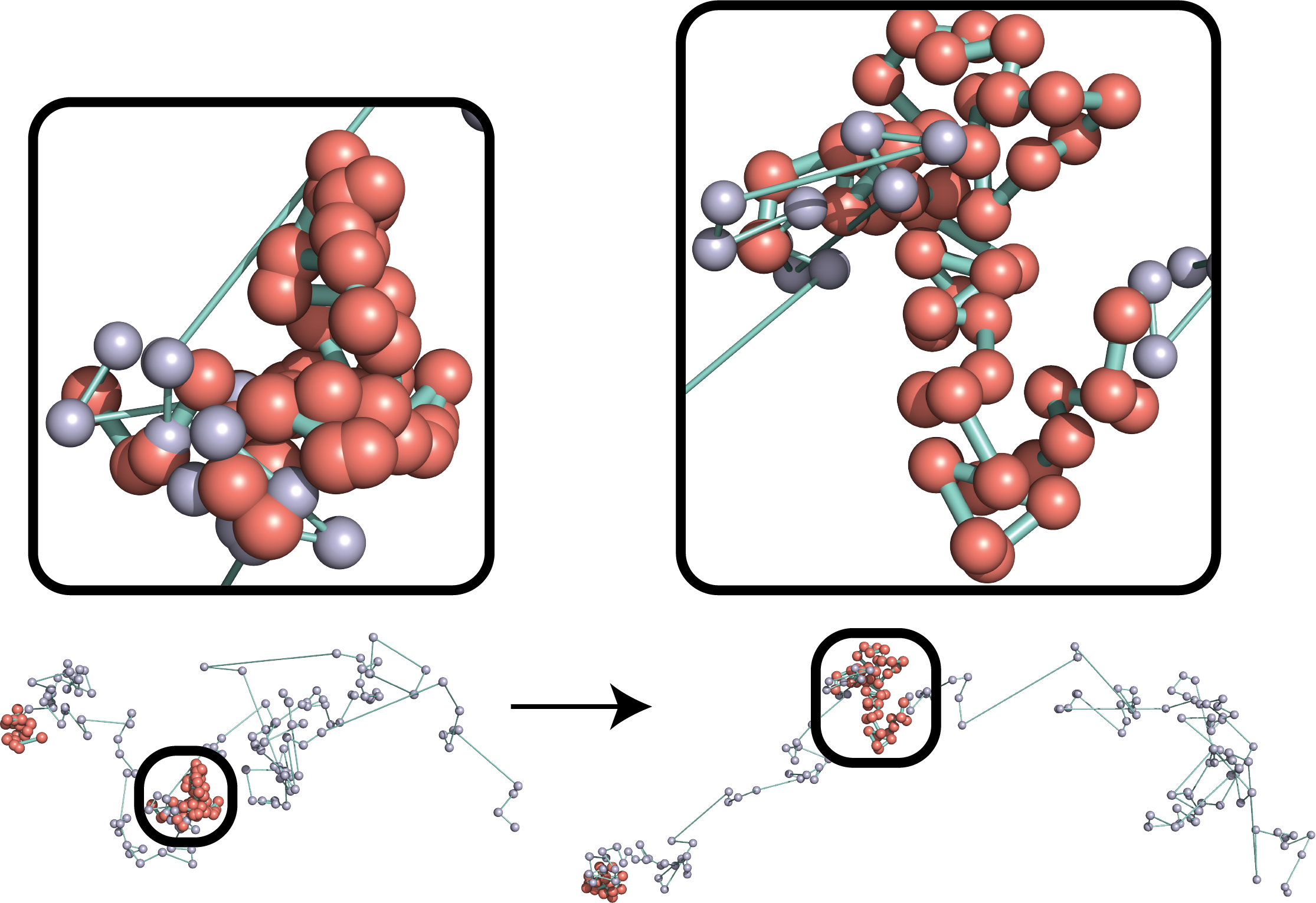
We also use the codebase in Wakim and Spakowitz, PNAS, 2024 to resolve steric clashes between nucleosomes in chromatin fibers modeled with the kinked wormlike chain.
Overall, Chromo provides an adaptable simulation framework for modeling chromatin in a bottom-up manner, using principles of polymer physics and statistical mechanics. The simulator captures the cooperative binding of multiple reader proteins to their respective epigenetic marks. The tool can be used to model chromatin at variable length scales and with varying levels of detail.
Tip
Use-cases of our chromatin simulator are demonstrated in the tutorials!